
 Infrastructure
In 2009, MARC coordinated a regional application for grant funds from the U.S. Department of Transportation's Transportation Investments Generating Economic Recovery (TIGER) program. The region received a total of $50 million: $26.2 million to fund transportation infrastructure improvements in the Green Impact Zone®, and $23.8 million for improvements to regional transit corridors that extend from the urban core into suburbs on both sides of the state line.
Investments planned for the Green Impact Zone include:
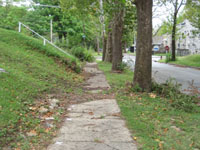
- Sidewalks, transit facilities, stormwater management and streetscape improvements: Replacing broken sidewalks, curbs and driveway approaches on 10 miles of arterial streets in the zone; developing green solutions for stormwater runoff; and improving 14 bus stops with shelters, benches, bus pull-outs and bus pads.
- Traffic-signal upgrades: Replacing outdated controllers with modern equipment that allows phasing and timing of signals; and installing mast arms for signals, eliminating old signal poles that contain lead paint.
- Traffic-signal synchronization: Synchronizing signals on arterial corridors.
- Street rehabilitation: Resurfacing 3.02 miles of pavement in the 150-square-block zone.
- Troost Bridge: Replacing the current bridge at Troost Avenue and Volker Boulevard to accommodate a new bus rapid transit route and pedestrian travel.
The city of Kansas City, Mo., and the Kansas City Area Transportation Authority (KCATA) are handling contract negotiations and subagreements for the TIGER projects, while MARC took responsibility for finalizing master agreements with the Federal Transit Administration.
Kansas City has already begun work on the Troost Avenue bridge, and KCATA is currently making improvements for the Troost MAX bus rapid transit service. Sidewalk, curb and pavement work will begin in 2011. Bidding for many of these projects is scheduled to begin in the next few months. Learn more about specific projects in the Green Impact Zone.


